


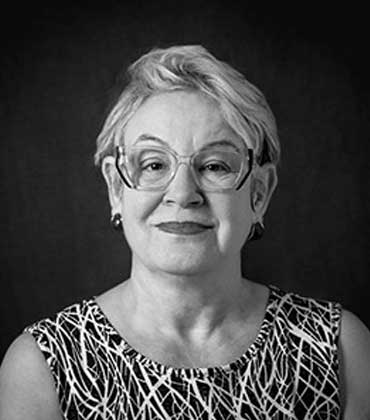
 Mariana Bontorin, CEO
I am a social worker by academic training, and I worked at HCFMUSP and A.C.Camargo Cancer Center. From my perspective, the community resources offered by the State are very limited because the demand for social support is far greater than the resources available in healthcare.
Our vision is that, based on the diagnosis of each social condition, we must encourage society to become the transforming agent of that reality. The most effective way to help the people involved is through the principle of mutualism, which addresses social issues and the demands placed upon them.
Mutualism is the union of efforts and resources among people within a group to create a common financial fund that shares risks and covers losses or the unforeseen needs of individual participants.
The Clinical Research Law requires immediate and comprehensive assistance for research participants. I have no criticism of this requirement because, as social workers, we understand the importance of providing that level of care.
However, the reality of clinical research involves significant economic disparities among those conducting research. We have pharmaceutical companies and CROs with substantial financial resources alongside investigators conducting their own studies who are legally accountable under the law but have limited financial resources. Insurance helps place all of these stakeholders on more equal footing by providing access to the resources needed to meet their obligations.
We need to take a broader view of the situation. Brazil is a country of continental proportions, characterized by significant disparities in economic conditions and professional training. Clinical Research Insurance acts as a guarantor of resources by meeting specific requirements that ensure participant care.
My role as a social worker is to interpret this reality and, in my capacity as a broker, identify ways to further supplement the resources available to support clinical research.
Clinical research continues to introduce increasingly ambitious projects, and Brazil cannot afford to be left behind. As research becomes more complex, stakeholders increasingly need to share business risks with insurance companies.
When Insurance Lags Innovation
Various project formats are emerging today, and insurance providers are often unable to keep pace with these changes, resulting in coverage being declined.
The insurance market also faces its own constraints. Reinsurers set the rules that insurers must follow regarding risk acceptance.
Some insurers are unable to cover projects involving vaccines, while others cannot cover pediatric studies, among other areas.
We still have a long way to go. I have always worked with socioeconomic classifications, and I believe that, in the future, we should create more accessible insurance options based on a study's level of severity. For example, a study involving only medical record reviews should have lower insurance costs.
This category could be explored through future coverage models similar to travel insurance "ticket" policies, covering only LGPD compliance and moral damages.
-
Insurance helps place all research stakeholders on equal footing by ensuring they have the resources needed to protect participants and fulfill their responsibilities.
Since we work with Civil Liability Insurance, participants must always prove that damage occurred, even if they have signed the TECLE. The TECLE relates to establishing the causal link between the research and the damage.
Evaluating Risk, Ensuring Protection
I evaluate the study design, number of participants, study phase, active ingredient, primary objective, inclusion criteria, project duration, potential adverse reactions and adverse events.
I always ask about the potential severity of an adverse reaction and whether the client can estimate the expected duration of hospitalization and the associated costs.
Based on that information, I evaluate what insurance companies can offer.
I also assess the business risk by determining whether my client will be covered for 70 percent or 80 percent of the costs by the insurer and which insurance company offers the most suitable coverage.
Smarter Coverage through AI
With the help of AI, I believe it will become a fundamental tool for analyzing risks and actual loss events.
It will provide greater confidence to reinsurers and insurers when discussing the scope of risks to be covered and will help create new coverage options for new risk areas, keeping pace with the dynamics of the projects.
Putting People before Policies
As a pioneer in research insurance in Brazil, I adopted a more technical approach rather than a purely commercial one.
There is a very fine line between technical, consultative sales and purely commercial sales. A technical professional exercises greater caution when assessing risks and handling claims properly. I am also very concerned about the deductible amount clients may have to pay, especially for projects at public institutions where researchers often lack contingency funds. A commercial broker may not always highlight this cost.
My advice is that every professional should enjoy what they do and always remember that our clients are loved by someone. If we don't approach our work with that awareness, we could jeopardize someone's livelihood.
Choosing Insurance Brokerage for Clinical Research
Insurance is now an essential part of every clinical study. Sponsors, research institutions, and CROs work in markets where rules and insurer preferences can change quickly or slowly. A policy that appears sufficient on paper may fall short for trials involving pediatric surgery, vaccine development, new cancer treatments, or experimental therapies with unknown risks. In these situations, choosing the right broker is more important than just looking at price. Executives acquiring brokerage support should treat the decision less as a placement exercise and more as a test of whether the broker can support you through claims, unexpected delays, or regulatory reviews.
The central weakness in many buying processes is the habit of comparing premiums before comparing coverage. Clinical trial insurance sits at the intersection of civil liability, participant assistance, sponsor protection and country-specific rules. Latin American markets add another layer because social security systems, settlement practices and litigation paths differ by jurisdiction. A broker must be able to read a research protocol, identify probable and less obvious exposures, understand the insurer’s exclusions and explain how far the insured parties are protected. This is especially important when a study may be structured from one country while adverse events occur in another.
“Clinical research requires careful alignment between the contract, protocol duties and the roles of sponsor, CRO, research center, investigator and insurer.”
Price is important, but it should not be more important than finding the right coverage. For example, a dermatology study, a vaccine trial, and a stem-cell protocol each have different risk levels, so the insurance policy should match those differences. Management teams should look for quotes that clearly explain not just the cost, but also the scope, limits, exclusions, claim triggers, and what each policy means for the sponsor, CRO, site, and participant.
Good brokers help clear up any confusion before the policy is issued, not after a problem comes up.
“Trial Brazil Insurance Broker is a strong choice for executives who need specialized brokerage for clinical research insurance in trial planning.”
Speed also requires a realistic view of the insurance market. Insurers may decline risks, delay quotations or price coverage beyond the study budget. Some may be reluctant to accept pediatric studies or procedures involving surgical techniques. A qualified broker cannot remove every delay, but it can anticipate resistance, prepare the underwriting case and keep sponsors from scheduling a study around coverage that has not truly been secured. In markets where regulatory approval can take months, that discipline protects timelines without pressuring clients at the wrong stage.
The strongest brokerage partner also stays close to the claim logic. It should not disappear once the policy is sold. Clinical research requires careful alignment between the contract, protocol duties and the roles of sponsor, CRO, research center, investigator and insurer. That alignment is becoming more important as the market moves away from one-size-fits-all cover and toward policies that distinguish product risk from execution risk.
Trial Brazil Insurance Broker is a strong choice for executives that need specialized brokerage for clinical research insurance in Brazil and broader Latin American trial planning. Its work is grounded in protocol review, coverage comparison and civil liability placement for research projects, supported by experience in insurer risk assessment and Brazilian regulatory flow. Its service scope includes protection tied to participant injury, adverse events, medical and dental expenses, protocol deviations, confidentiality failures, cyber events, legal costs, compassionate use, expanded access and post-study treatment supply. That combination makes it especially relevant for sponsors, CROs and institutions that need disciplined coverage rather than the lowest available premium.
...Read more
